Three Major Trends in Data Center Development
2024-08-23
In 2024, artificial intelligence (AI) will continue to drive the development of data center energy consumption and computing power, and bring new business models to the data center market segment.
Whether it is daily apps such as mobile banking and social media, or cutting-edge emerging technologies such as artificial intelligence (AI) and immersive games, data centers, as the invisible engine, have been quietly driving the evolution of all these applications. As more and more applications migrate to the cloud and the AI boom, the energy consumption, cooling and security requirements of data center operations have also changed.
Looking forward to 2024, we believe that data center operators should pay attention to the following three prominent trends:
I. Artificial intelligence will continue to drive change and innovation
In last year's forecast, we saw that compared with traditional data centers, artificial intelligence and machine learning have higher power density requirements, which are 3 times that of traditional data centers. The specific processing mode of large language models (LLMs) requires a large number of fiber connections, and also puts higher requirements on equipment power supply and cooling.
Artificial intelligence will continue to be one of the driving forces of data center development trends in 2024. We will continue to see the widespread deployment of artificial intelligence and machine learning (ML) in data centers, especially in hyperscale data centers, which requires better optimization of energy consumption and resources. Additionally, as companies continue to build large language models, they will also need to build new inference networks that analyze new data sets to make predictions, which require greater throughput and lower latency.
Currently, the vast majority of work in AI is built on these large language models, such as OpenAI's GPT-3 and GPT-4, Meta's LLaMA, and Google's PaLM2. Billions of computations are run during the development of these models, which essentially "teach" them what they need to know. Now, most of the major players in this space are beginning to turn to using these models to scale specific applications. This will once again change the demand for energy and computing power in data centers.
What is the possible result of the shift from development to inference? This will drive the development of edge computing. As specific AI applications are developed, companies will seek processing power closer to where the applications are used. They will seek smaller data centers to bring the heavy computing closer to where it is actually used (i.e. manufacturing parks, universities, hospitals, etc.).
2. The multi-tenant data center space will usher in a highlight moment
Usually, hyperscale operators design and build the largest data center campuses. But as the energy and space requirements to support AI, machine learning, and other emerging applications continue to increase, hyperscale data center operators may need to explore alternative ways to build facilities.
This creates an opportunity for multi-tenant data centers (MTDCs). These operators have both development capabilities similar to real estate companies and technical capabilities (they own the site), and they know how to meet power and cooling needs. Therefore, multi-tenant data centers are a good choice when hyperscale operators need to operate facilities in areas where both site and energy are limited.
Enterprise users also want to take advantage of these emerging technologies, but building data center facilities is a significant capital investment. For example: multi-tenant data centers and other new "cloud" service providers provide "AI cloud services" and rent dedicated server space to an organization (regardless of the size of the organization) to run AI computing tasks.
Multi-tenant data centers will also play a role in the rise of edge computing as enterprises will seek computing power closer to where applications are deployed.
3. Advances in optical modules help data center operators maximize space utilization
The adoption of new technologies requires data centers to generate exponentially growing computing power and transmit more data faster. Given space and power supply constraints, operators know that simply adding more fiber interconnects to meet these demands is not a sustainable strategy.
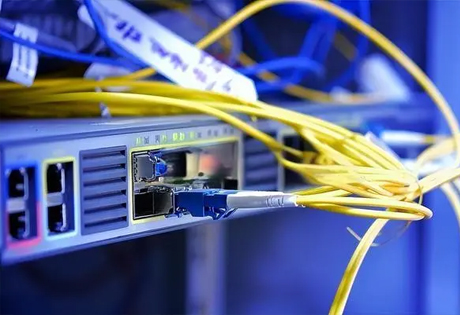
Especially for hyperscale data centers, operators have begun to deploy 800G optical transceivers to support applications, and it is possible to see some 1.6TB prototypes in 2024. High-performance computing applications such as artificial intelligence and machine learning are driving 800G optical deployment. The latest network switches used to interconnect with AI servers in the data center support 800G interconnects. In many cases, the optical module ports on these network switches are operating in breakout mode, in which an 800G line is divided into two 400G lines or multiple 100G lines. This allows data center operators to increase the connectivity of the switch and interconnect more servers. While we see optical transceiver upgrades, that is, optical wavelengths and fibers can carry more data, we will also see optical modules that work with fewer connections and higher speeds, which will benefit data center customers by reducing cable congestion and improving airflow within the rack.
Advances in optical fiber technology make it possible for fibers and wavelengths to carry more data. Typical multimode 400G SR8 optical transceivers come with 16 fiber connections for short-reach applications, but 400G SR4 transceivers (which reduce the fiber count to eight) are entering the market. These and other new transceivers play a big role in helping data centers meet growing data demands.
Related to this trend are advances in connector miniaturization, and the development of solutions such as ultra-small connectors will help data center operators make greater use of limited space.
Conclusion
CIOs and CTOs should stay on top of these emerging trends to ensure that data centers can support emerging business processes and new use cases. While it will be tempting to piece together individual component solutions just to keep up with rapidly evolving technology, a comprehensive engineered solution that meets customers’ current and future data needs will always be a stronger strategy.
Los conectores MPO abren grandes oportunidades
100G ZR Pluggable Optical Module
Artículo relacionado
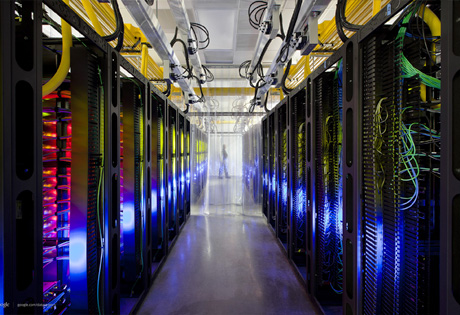
By the end of 2024, there will be 5,697 public data centers worldwide, including 5,186 colocation sites and 511 hyperscale sites.
Global Data Center Status and Trends

By the end of 2024, there will be 5,186 colocation data centers worldwide. With a compound annual growth rate (CAGR) of 6.6%, the number of colocation data centers will increase to 7,640 by 2030.
Where are The World's Data Centers?