How to Choose a Switch in a Project?
2024-05-17
1. Network scale and hierarchy
Considering the network scale and switch application level, it is mainly divided into small and medium-sized networks and large and medium-sized networks.
When selecting a switch, you can select it through the OSI reference model. If an enterprise only does data forwarding, it is recommended to use a Layer 2 switch. If departments are divided to create isolation between departments, it is recommended to choose a three-layer switch. If you need to set up gateway, firewall and other functions, you need a more advanced firewall-level switch.
How to plan network hierarchy:
The network structure determines what equipment to use. Some small networks only have a core layer and an access layer, so core switches are relatively easy to choose and the pressure is not great. For example, some small monitoring networks are only carried out in the intranet, so Just select a Layer 2 switch.
How to plan network hierarchy:
The network structure determines what equipment to use. Some small networks only have a core layer and an access layer, so core switches are relatively easy to choose and the pressure is not great. For example, some small monitoring networks are only carried out in the intranet, so Just select a Layer 2 switch.
Of course, in a large network, it is difficult to coordinate the distribution of the access layer and the core layer alone, so a three-layer structure is required. The core layer, aggregation layer, and access layer use the aggregation layer to decompose the pressure on the core switches, which involves the division of VLANs. Network management and other functions require a layer 3 switch.
Most networks have only three layers. The fewer the network structure layers, the faster the network response. A simple network structure is beneficial in terms of response speed and later fault maintenance.
2. Number of ports on the switch
The number of ports on the switch. The number of physical ports supported by the switch determines the number of terminals or secondary receiving devices connected to the switch. It needs to be selected based on actual needs. Of course, subsequent network expansion also needs to be considered. The access port of the switch is used to connect to intranet terminals, and the uplink port is used to connect to upper-level equipment.
If the number of points is around 16 and the number does not change much in the long term, you can choose to change the machine 24 hours a day. If the number of points exceeds 16 and there are other network devices, you need to adjust the number of ports at this time. For certain redundancy, you can choose 48*** replacement.
3. Port parameters
The main port parameters need to be considered:
Port speed (100M, 100M, 10G) and port type (RJ45, SFP/optical port, PoE power supply network port, etc.). How many optical ports are there, or how many electrical ports are there, etc., the number of 100M ports and Gigabit ports.
4. Switch function support
Consider the switch's functional support, whether it has network management functions, module redundancy, route redundancy, four-layer switching, scalability, etc. The security features of the switch also need to be considered.
Specific examples include: access control, 802.1X authentication, loopback detection, quad binding, IGMP Snooping, etc.
5. Backplane bandwidth
Backplane bandwidth, also called switching capacity, is the maximum amount of data that can be throughput between the switch interface processor and the data bus, just like the total number of lanes an overpass has. Since all communication between ports needs to be completed through the backplane, the bandwidth provided by the backplane becomes a bottleneck for concurrent communication between ports.
The larger the bandwidth, the greater the available bandwidth provided to each port, and the greater the data exchange speed; the smaller the bandwidth, the smaller the available bandwidth provided to each port, and the slower the data exchange speed. In other words, the backplane bandwidth determines the data processing capability of the switch. The higher the backplane bandwidth, the stronger the data processing capability. If you want to achieve full-duplex non-blocking transmission of the network, you must meet the minimum backplane bandwidth requirements.
The backplane bandwidth calculation formula is as follows:
Backplane bandwidth = number of ports × port rate × 2
Tip: For a three-layer switch, only the forwarding rate and backplane bandwidth meet the minimum requirements to be a qualified switch. Both are indispensable.
Calculation example:
How about a switch with 24 ports, each port speed is Gigabit.
Backplane bandwidth=24*1000*2/1000=48Gbps.
The backplane bandwidth calculation formula is as follows:
Backplane bandwidth = number of ports × port rate × 2
Tip: For a three-layer switch, only the forwarding rate and backplane bandwidth meet the minimum requirements to be a qualified switch. Both are indispensable.
Calculation example:
How about a switch with 24 ports, each port speed is Gigabit.
Backplane bandwidth=24*1000*2/1000=48Gbps.
6. Packet forwarding rate
The data in the network is composed of data packets, and the processing of each data packet consumes resources. The forwarding rate (also called throughput) refers to the number of data packets that pass through per unit time without packet loss. Throughput is like the traffic volume of an overpass. It is the most important parameter of a three-layer switch and marks the specific performance of the switch. If the throughput is too small, it will become a network bottleneck and have a negative impact on the transmission efficiency of the entire network.
The switch should be able to achieve wire-speed switching, that is, the switching rate reaches the data transmission speed on the transmission line, thereby eliminating switching bottlenecks to the greatest extent. For the three-layer core switch, if you want to achieve non-blocking transmission of the network, the rate can be ≤ the nominal layer 2 packet forwarding rate and the rate can be ≤ the nominal layer 3 packet forwarding rate, then the switch is doing layer 2 and layer 3 packet forwarding. Line speed can be achieved during layer switching.
The packet forwarding rate formula is as follows
Throughput (Mpps) = Number of 10 Gigabit ports × 14.88 Mpps + Number of Gigabit ports × 1.488 Mpps + Number of 100 Mbit ports × 0.1488 Mpps.
If the calculated throughput is less than the throughput of your switch, then line speed can be achieved.
If there are 10 Gigabit ports and 100 Mbit ports, they will be counted. If not, they will not be counted.
Calculation example:
For a switch with 24 Gigabit ports, its fully configured throughput should reach at least 24×1.488 Mpps=35.71 Mpps to ensure non-blocking packet switching when all ports operate at line speed.
7. Look at the brand
For now, the parameter data of many off-brand switches are good, especially the packet forwarding rate and backplane bandwidth, but they are not good enough to use, so when buying a switch, you still need to look at the brand.
The enterprise-level switches of brands such as Huawei, Ruijie, H3C, and Cisco all have high ratings, and each has its own merits. As domestic brands, Huawei, Ruijie, and H3C are developing very rapidly in the field of switches. As an old company, Cisco has a very strong Strength needs to be considered based on the project and your own situation.
The Function of POE on the Switch
MPO Connector Inspection Solution(2)
Artículo relacionado
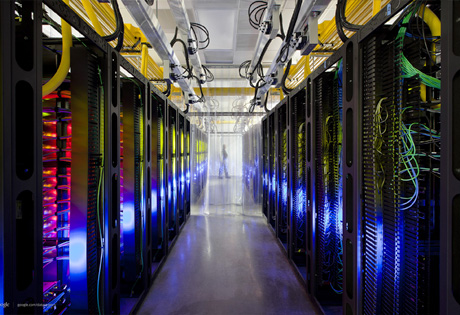
By the end of 2024, there will be 5,697 public data centers worldwide, including 5,186 colocation sites and 511 hyperscale sites.
Global Data Center Status and Trends

By the end of 2024, there will be 5,186 colocation data centers worldwide. With a compound annual growth rate (CAGR) of 6.6%, the number of colocation data centers will increase to 7,640 by 2030.
Where are The World's Data Centers?