Módulo óptico 100G y tecnología fotónica de silicio
2023-10-26
With the rise of technologies such as cloud computing, big data and the Internet of Things, the demand for data transmission speed is growing. Traditional copper wire transmission faces problems such as bandwidth bottlenecks and signal attenuation, while optical fiber communication has become the first choice for future communications due to its high bandwidth and low loss. The integration of 100G optical modules and silicon photonics technology makes high-speed, high-density, and low-power communication possible, bringing a revolution to the communications field.
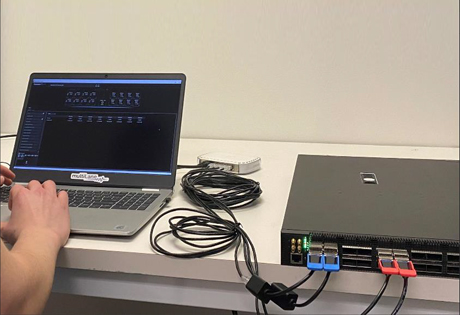
A 100G optical module, also known as a 100G transceiver, is a network interface device that facilitates high-speed data transmission over optical fiber cables at a rate of 100 gigabits per second (Gbps). These modules are commonly used in data centers, telecommunications networks, and high-performance computing environments where high bandwidth and fast data transfer are essential. Here are some key aspects of 100G optical modules:
1. Form Factors:
- There are several form factors for 100G optical modules, each designed for specific applications and environments. Common form factors include CFP (C Form-factor Pluggable), CFP2, CFP4, QSFP28 (Quad Small Form-factor Pluggable), and OSFP (Octal Small Form-factor Pluggable).
- There are several form factors for 100G optical modules, each designed for specific applications and environments. Common form factors include CFP (C Form-factor Pluggable), CFP2, CFP4, QSFP28 (Quad Small Form-factor Pluggable), and OSFP (Octal Small Form-factor Pluggable).
2. Transmission Media:
- 100G optical modules transmit data over optical fiber cables. Single-mode fiber (SMF) and multi-mode fiber (MMF) are the two primary types of optical fibers used, with the choice depending on the distance and specific requirements of the network.
- 100G optical modules transmit data over optical fiber cables. Single-mode fiber (SMF) and multi-mode fiber (MMF) are the two primary types of optical fibers used, with the choice depending on the distance and specific requirements of the network.
3. Distance and Reach:
- The reach of a 100G optical module depends on the type of optical fiber used. Short-range modules are designed for distances within a data center or between nearby data centers, while long-range modules are suitable for longer distances, such as metro or long-haul connections.
- The reach of a 100G optical module depends on the type of optical fiber used. Short-range modules are designed for distances within a data center or between nearby data centers, while long-range modules are suitable for longer distances, such as metro or long-haul connections.
4. Wavelengths:
- Different wavelengths of light are used for transmitting and receiving data. Common wavelengths for 100G modules include 850nm for multi-mode fiber and 1310nm or 1550nm for single-mode fiber.
- Different wavelengths of light are used for transmitting and receiving data. Common wavelengths for 100G modules include 850nm for multi-mode fiber and 1310nm or 1550nm for single-mode fiber.
5. Modulation Formats:
- Various modulation formats can be employed to encode data onto the optical signal. Common modulation formats include PAM4 (Pulse Amplitude Modulation 4) and DPSK (Differential Phase Shift Keying).
- Various modulation formats can be employed to encode data onto the optical signal. Common modulation formats include PAM4 (Pulse Amplitude Modulation 4) and DPSK (Differential Phase Shift Keying).
6. Applications:
- 100G optical modules are used in various applications, including high-speed networking within data centers, backbone connections in telecommunications networks, and connections between high-performance computing systems.
- 100G optical modules are used in various applications, including high-speed networking within data centers, backbone connections in telecommunications networks, and connections between high-performance computing systems.
7. Protocols:
- 100G modules support different networking protocols, such as Ethernet and InfiniBand, depending on the specific needs of the network.
- 100G modules support different networking protocols, such as Ethernet and InfiniBand, depending on the specific needs of the network.
8. Hot-Pluggable:
- Most 100G optical modules are hot-pluggable, allowing for the removal and replacement of modules without disrupting the overall network operation.
- Most 100G optical modules are hot-pluggable, allowing for the removal and replacement of modules without disrupting the overall network operation.
9. Compatibility:
- It's essential to ensure compatibility between the 100G optical module and the network equipment it connects to. This includes compatibility with the switch, router, or other networking devices.
- It's essential to ensure compatibility between the 100G optical module and the network equipment it connects to. This includes compatibility with the switch, router, or other networking devices.
10. Cost and Power Consumption:
- The cost and power consumption of 100G optical modules are important considerations, especially in large-scale deployments. Advances in technology may lead to more power-efficient and cost-effective solutions over time.
- The cost and power consumption of 100G optical modules are important considerations, especially in large-scale deployments. Advances in technology may lead to more power-efficient and cost-effective solutions over time.
11. Forward Error Correction (FEC):
- FEC is a feature in some 100G modules that helps improve the reliability of data transmission by detecting and correcting errors.
- FEC is a feature in some 100G modules that helps improve the reliability of data transmission by detecting and correcting errors.
As technology evolves, higher-speed optical modules, such as 200G and 400G, have also been developed to meet the increasing demands for bandwidth in modern networks. When deploying 100G optical modules, it's crucial to consider the specific requirements of the network, the reach needed, and the compatibility with existing infrastructure.
1. 100G optical module and silicon photonic technology definition
The 100G optical module is a high-speed optical communication technology that can achieve a data transmission rate of 100Gbps per second. This module uses a variety of advanced technologies, such as multi-channel parallelism, high-precision modulation, efficient digital signal processing, etc., allowing it to show superior performance in long-distance and large-scale data transmission. The 100G optical module has the advantages of smaller size and lower power consumption.
Silicon photonics technology is a technology based on silicon-based optoelectronic integrated chips that combines optoelectronics and semiconductor technology. Its main feature is the use of silicon-based materials to realize the transmission and processing of optical signals. The silicon optical module uses silicon photonics technology to integrate photoelectric conversion and transmission modules on the silicon chip. It combines microelectronics and optoelectronics on a silicon-based platform to form a new silicon optical device. This technology adopts advanced manufacturing processes and design concepts, allowing it to achieve the advantages of high integration, high stability, high reliability, and low cost.
2. Application of silicon photonic technology in 100G optical modules
In 100G optical modules, silicon photonic technology can be used in the manufacturing of optical transmitters and optical receivers, thereby improving the integration and performance of the optical module. In addition, silicon photonic technology can also be used to implement functional devices such as optical modulators and optical switches to further improve the transmission rate and stability of optical modules.
At the same time, 100G optical modules and silicon photonics technology also have their own advantages and disadvantages. 100G optical modules are suitable for short-distance and large-scale data transmission, while silicon photonic technology is suitable for long-distance and high-speed data transmission. Therefore, in different application scenarios, it is necessary to choose the appropriate technology according to specific needs. In the continuous development of network technology, these two technologies are expected to merge with each other to form more advanced optical communication technology.
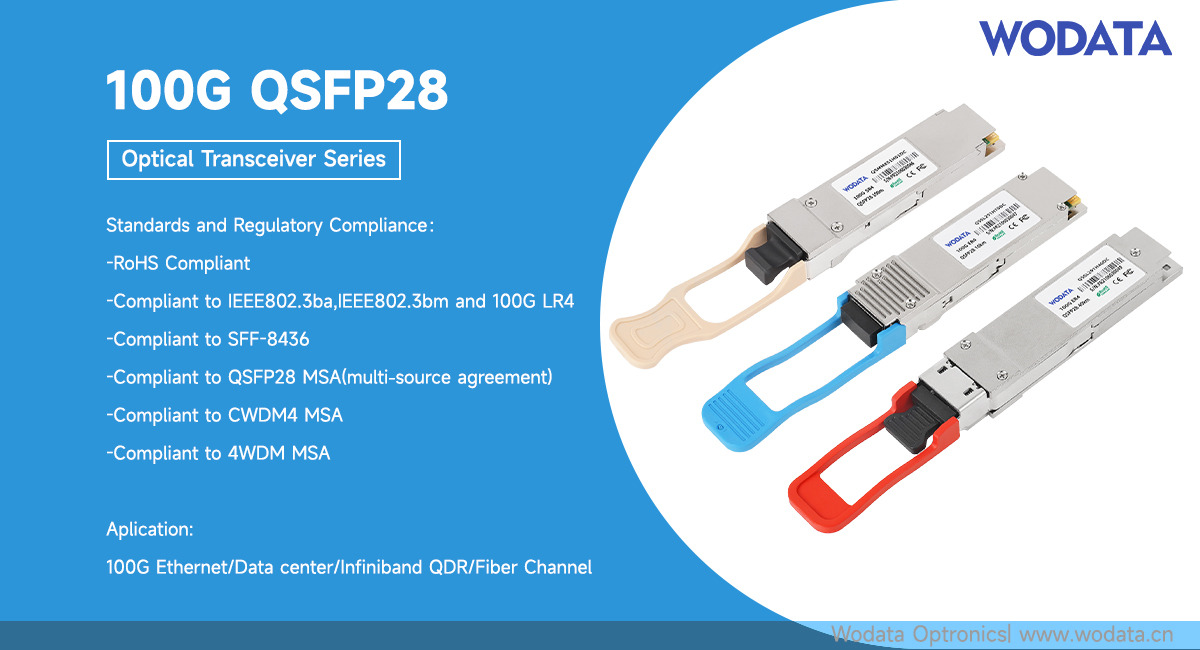
In short, 100G optical modules and silicon photonics technology, as the two leading technologies in the field of optical communications, have shown huge advantages and broad application prospects in the era of big data. In the future, with the continuous development and innovation of science and technology, 100G optical modules and silicon photonics technology are expected to further evolve, lead the revolution in the communications field, and create a more convenient and efficient digital life for mankind. Wodata can provide 100G series optical modules, welcome everyone to learn about and purchase!
Aplicación del módulo transceptor óptico en la red 5G
Entorno y componentes de red del centro de datos
Artículo relacionado

By the end of 2024, there will be 5,697 public data centers worldwide, including 5,186 colocation sites and 511 hyperscale sites.
Global Data Center Status and Trends

By the end of 2024, there will be 5,186 colocation data centers worldwide. With a compound annual growth rate (CAGR) of 6.6%, the number of colocation data centers will increase to 7,640 by 2030.
Where are The World's Data Centers?