
The Difference Between RJ45 Module and Optical Transceiver
2024-01-18
RJ45 transceivers and optical transceivers serve distinct roles in networking and differ significantly in terms of their underlying technology, the medium they use for data transmission, and their applications. Below, I'll outline the primary differences between RJ45 transceivers and optical transceivers:
1. Transmission Medium:
- RJ45 Transceivers: These transceivers use copper-based Ethernet cables, commonly employing twisted pair cables with an RJ45 connector. The physical layer of the OSI model for RJ45 transceivers is based on electrical signals transmitted over copper conductors.
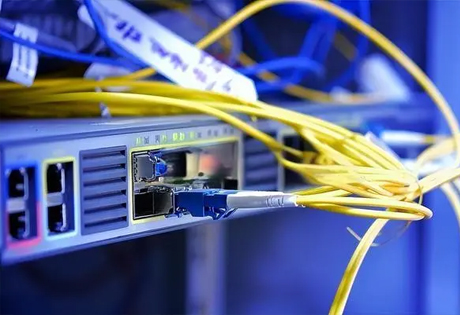
- Optical Transceivers: Optical transceivers, on the other hand, use fiber-optic cables for data transmission. They utilize light signals (usually in the form of lasers or LEDs) that travel through the core of the optical fiber, enabling higher data rates and longer-distance communication compared to copper-based alternatives.
2. Data Transmission Rates:
- RJ45 Transceivers: While RJ45 transceivers support various Ethernet standards such as 10BASE-T, 100BASE-TX, and 1000BASE-T, they are generally associated with lower data rates compared to optical transceivers. Copper-based Ethernet has limitations on speed and distance.
- Optical Transceivers: Optical transceivers are capable of supporting much higher data rates, commonly ranging from 1 Gbps to 100 Gbps or even higher. They are particularly well-suited for applications requiring high bandwidth and long-distance communication.
3. Distance Limitations:
- RJ45 Transceivers: Copper-based Ethernet has distance limitations, and the performance degrades over longer cable lengths. This makes RJ45 transceivers more suitable for shorter-distance connections within buildings or local networks.
- Optical Transceivers: Fiber-optic cables used with optical transceivers allow for longer-distance communication without significant loss of signal quality. This makes optical transceivers ideal for applications that require data transmission over extended distances, such as metropolitan area networks (MANs) or long-haul connections.
4. Interference and Electromagnetic Interactions:
- RJ45 Transceivers: Copper cables are susceptible to electromagnetic interference (EMI) and signal degradation due to factors like crosstalk. This can impact the reliability and quality of data transmission.
- Optical Transceivers: Fiber-optic cables are immune to EMI, providing a more stable and secure transmission medium. This makes optical transceivers preferable in environments where electromagnetic interference is a concern.
5. Applications:
- RJ45 Transceivers: Commonly used in local area networks (LANs), data centers, and short-distance connections where the data rates and distances are within the capabilities of copper-based Ethernet.
- Optical Transceivers: Widely used in scenarios requiring high bandwidth, long-distance connections, and situations where immunity to electromagnetic interference is critical. Optical transceivers are prevalent in backbone networks, wide area networks (WANs), and high-performance computing environments.
In summary, the primary distinction between RJ45 transceivers and optical transceivers lies in the transmission medium, data rates, distance capabilities, susceptibility to interference, and specific applications. The choice between them depends on the specific requirements of the networking environment, considering factors such as data speed, distance, and the need for immunity to electromagnetic interference.
Wodata is founded in 2003 to provide the most cost-effective solution to the problems in the optical communication of telecom networks and data centers. Has its own trade mark and located in Shenzhen with more than 12 people in R&D team.Wodata is obsessively passionate about designing, engineering and manufacturing optical transceivers and components to help our customers better. Wotada is a value added resource for our clients. We provide a widely diversified transceiver portfolio with excellent quality and low cost including SFP/SFP+/XFP/Xenpak/X2/QSFP+/QSFP28/CFP/CFP2/QSFP-DD/AOC/DAC. The technology in optical communication is ever developing, our talented engineering team enables us to keep up and deliver the products as the customer demands.
The Top Ten Network Switch Brands
Configuring Optical Modules in The Data Center
Related Article
By the end of 2024, there will be 5,697 public data centers worldwide, including 5,186 colocation sites and 511 hyperscale sites.
Global Data Center Status and Trends
By the end of 2024, there will be 5,186 colocation data centers worldwide. With a compound annual growth rate (CAGR) of 6.6%, the number of colocation data centers will increase to 7,640 by 2030.
Where are The World's Data Centers?