Choosing Ethernet Switches for Harsh Environments
2023-11-10
Ethernet switches are networking devices that play a crucial role in connecting devices within a local area network (LAN). They operate at the data link layer (Layer 2) of the OSI (Open Systems Interconnection) model and are designed to efficiently and intelligently forward data frames between devices on the same network. Here are some key aspects of Ethernet switches:
1. Switching Functionality:
- Ethernet switches use MAC (Media Access Control) addresses to forward data frames within a network. Unlike older network hubs that simply broadcast data to all connected devices, switches make decisions about where to send data based on the destination MAC address.
- Ethernet switches use MAC (Media Access Control) addresses to forward data frames within a network. Unlike older network hubs that simply broadcast data to all connected devices, switches make decisions about where to send data based on the destination MAC address.
2. Port Configuration:
- Switches come with multiple ports to which network devices (such as computers, printers, and other switches) can be connected. The number of ports varies, and switches can range from small desktop models with a few ports to large enterprise-grade switches with dozens or even hundreds of ports.
- Switches come with multiple ports to which network devices (such as computers, printers, and other switches) can be connected. The number of ports varies, and switches can range from small desktop models with a few ports to large enterprise-grade switches with dozens or even hundreds of ports.
3. Unicast, Broadcast, and Multicast:
- Switches operate in unicast, broadcast, and multicast modes. Unicast involves sending data to a specific device, while broadcast sends data to all devices in the network. Multicast sends data to a specific group of devices.
- Switches operate in unicast, broadcast, and multicast modes. Unicast involves sending data to a specific device, while broadcast sends data to all devices in the network. Multicast sends data to a specific group of devices.
4. MAC Address Table:
- Switches maintain a MAC address table that maps MAC addresses to the corresponding switch ports. This allows the switch to efficiently forward data only to the port where the destination device is connected.
- Switches maintain a MAC address table that maps MAC addresses to the corresponding switch ports. This allows the switch to efficiently forward data only to the port where the destination device is connected.
5. Store-and-Forward vs. Cut-Through Switching:
- Ethernet switches can use different switching methods. "Store-and-forward" switches receive and store the entire frame before forwarding it, checking for errors. "Cut-through" switches start forwarding the frame as soon as the destination address is identified, without waiting for the entire frame.
- Ethernet switches can use different switching methods. "Store-and-forward" switches receive and store the entire frame before forwarding it, checking for errors. "Cut-through" switches start forwarding the frame as soon as the destination address is identified, without waiting for the entire frame.
6. Managed vs. Unmanaged Switches:
- Managed switches offer additional features and configurability, such as VLAN support, Quality of Service (QoS) settings, and network monitoring. Unmanaged switches, on the other hand, operate with minimal user intervention and are typically "plug-and-play."
- Managed switches offer additional features and configurability, such as VLAN support, Quality of Service (QoS) settings, and network monitoring. Unmanaged switches, on the other hand, operate with minimal user intervention and are typically "plug-and-play."
7. VLAN Support:
- Virtual LANs (VLANs) enable network segmentation, allowing the creation of multiple logical networks within a physical network. Managed switches often support VLANs, providing greater control over network traffic.
- Virtual LANs (VLANs) enable network segmentation, allowing the creation of multiple logical networks within a physical network. Managed switches often support VLANs, providing greater control over network traffic.
8. Power over Ethernet (PoE):
- Some switches support Power over Ethernet, which allows them to deliver electrical power to connected devices like IP cameras, phones, and wireless access points through the Ethernet cable.
- Some switches support Power over Ethernet, which allows them to deliver electrical power to connected devices like IP cameras, phones, and wireless access points through the Ethernet cable.
9. Link Aggregation:
- Managed switches may support link aggregation, where multiple physical links between switches or between a switch and another device are combined to increase bandwidth and provide redundancy.
- Managed switches may support link aggregation, where multiple physical links between switches or between a switch and another device are combined to increase bandwidth and provide redundancy.
10. Redundancy and High Availability:
- Enterprise-grade switches often include features for redundancy and high availability, such as Spanning Tree Protocol (STP) to prevent loops in the network.
- Enterprise-grade switches often include features for redundancy and high availability, such as Spanning Tree Protocol (STP) to prevent loops in the network.
Ethernet switches are fundamental components of modern networking, providing the connectivity infrastructure for homes, businesses, data centers, and various other environments. The choice between managed and unmanaged switches depends on the specific requirements and complexity of the network.
In today's digital world, Ethernet switches are an essential part of network connectivity and are used in a wide variety of environments and applications. In on-site transmission environments, industrial Ethernet switches are commonly used. Considering the price and cost, some users will choose commercial-grade switches. However, in some harsh and extreme environments, commercial Ethernet switches may reveal their limitations and become unsuitable for use. This article from WODATA Communications will explore why commodity Ethernet switches are not suitable in these situations and provide some alternatives.1. Temperature extremes
Commercial Ethernet switches are usually suitable for indoor environments with temperatures between 0°C and 50°C. These switches may not function properly in extreme hot or cold conditions. For example, in deserts or extremely cold polar regions, temperatures may be well outside this range. In these cases, specially designed industrial-grade switches are used that can operate reliably over a wider temperature range.
2. Electromagnetic interference
In addition to the above situations, strong electromagnetic interference may also exist in extreme environments, such as lightning, electromagnetic radiation or strong electromagnetic fields. Commercial Ethernet switches often do not have adequate electromagnetic interference suppression measures, which may cause network failures. In these cases, using an industrial-grade switch designed to be immune to interference is a wiser choice.
3. Special connection requirements
Some extreme environments require special types of connections, such as fiber optics or special protection of twisted pairs. Commercial Ethernet switches usually provide standard Ethernet ports and are not suitable for these special needs. In this case, you need to choose a special switch that supports the required connection type.
To sum up, commercial Ethernet switches have certain limitations when used in harsh environments, including extreme temperatures, electromagnetic interference, special connection requirements and other issues. In these environments, choosing industrial-grade or dedicated switches is a more reliable and secure choice, ensuring network stability and availability. Therefore, when designing network infrastructure, environmental conditions must be fully considered and suitable hardware devices must be selected to ensure that the network can operate normally under various extreme conditions.
Market Size and Competition Landscape, Switch Technology Trends
Application of Optical Transceiver Module in 5G Network
Related Article
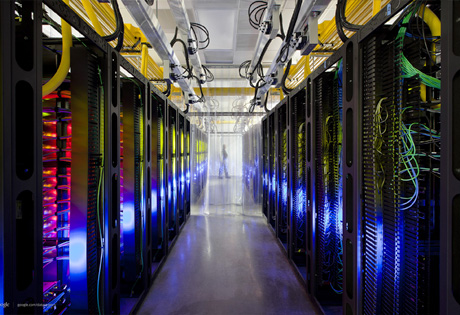
By the end of 2024, there will be 5,697 public data centers worldwide, including 5,186 colocation sites and 511 hyperscale sites.
Global Data Center Status and Trends

By the end of 2024, there will be 5,186 colocation data centers worldwide. With a compound annual growth rate (CAGR) of 6.6%, the number of colocation data centers will increase to 7,640 by 2030.
Where are The World's Data Centers?