Advantages of 100G QSFP28 LR4 Optical Module
2023-12-22
With the rapid growth of digital information, the demand for high-speed and high-capacity networks has become increasingly urgent. The speed and distance of data transmission have become a key challenge. In this context, the 100G QSFP28 LR4 optical module, as an optical module with excellent performance, provides a new solution for long-distance high-speed transmission.
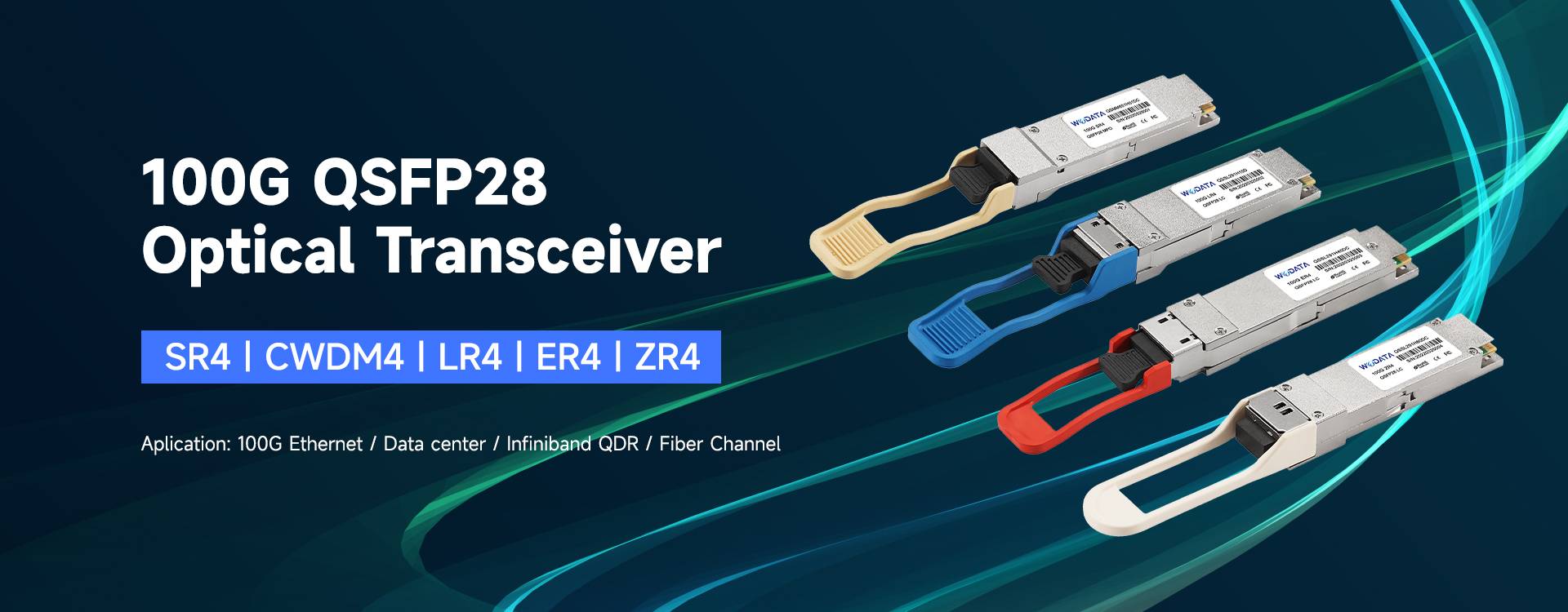
This product is a 100Gb/s transceiver module specially designed for 100G BASE-LR4 optical communication applications. This module converts 4 channels of 25Gb/s electrical data input into 4 channels of LAN WDM optical signals, and then multiplexes them into a single channel for 100Gb/s optical transmission. Instead, at the receiving end, the module demultiplexes the 100Gb/s optical input into 4 LAN WDM optical signal channels and then converts them into 4 electrical signal output channels.
The 100G QSFP28 LR4 optical module is designed in the QSFP form factor according to the Multi-Source Agreement (MSA) and supports DDM digital diagnostic functions. It is designed to handle the harshest external operating conditions including temperature, humidity and electromagnetic interference.
The center wavelengths of the four LAN WDM channels are 1295.56nm, 1300.05nm, 1304.58nm and 1309.14nm, as members of the LAN WDM wavelength grid defined in IEEE 802.3ba. This product comes with a high-performance cooled LAN WDM EA-DFB transmitter and a high-sensitivity PLN receiver, providing excellent performance for 100G Ethernet applications. Using the LC interface, the longest transmission range is up to 10km.
With the development and application of cloud computing, big data and artificial intelligence, the processing capabilities of data centers face severe challenges. The high-speed and long-distance transmission characteristics of the 100G QSFP28 LR4 optical module make it an ideal choice for high-speed data transmission within and between data centers.
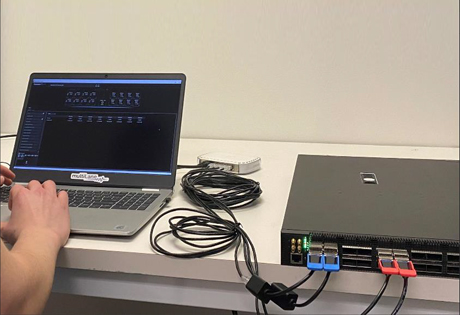
100G QSFP28 LR4 optical module is very suitable for long-distance connections in data centers and enterprise networks, such as 100G direct connections and interconnections. The connection method of the 100G direct connection solution is very simple. You only need to insert two QSFP28 LR4 optical modules into the corresponding 100G switch ports, and then use an LC fiber jumper to connect the two modules.
In order to solve the transmission problem of large amounts of data, in the construction of metropolitan area networks and wide area networks, the application of 100G QSFP28 LR4 optical modules has significantly increased the transmission speed of metropolitan area networks and wide area networks, while ensuring the demand for long-distance transmission.
Wodata is founded in 2003 to provide the most cost-effective solution to the problems in the optical communication of telecom networks and data centers. Has its own trade mark and located in Shenzhen with more than 12 people in R&D team.Wodata is obsessively passionate about designing, engineering and manufacturing optical transceivers and components to help our customers better. Wotada is a value added resource for our clients. We provide a widely diversified transceiver portfolio with excellent quality and low cost including SFP/SFP+/XFP/Xenpak/X2/QSFP+/QSFP28/CFP/CFP2/QSFP-DD/AOC/DAC. The technology in optical communication is ever developing, our talented engineering team enables us to keep up and deliver the products as the customer demands.
100G Optical Module and Silicon Photonics Technology
Optical Transceiver Connection Methods and Functions
Related Article

By the end of 2024, there will be 5,697 public data centers worldwide, including 5,186 colocation sites and 511 hyperscale sites.
Global Data Center Status and Trends

By the end of 2024, there will be 5,186 colocation data centers worldwide. With a compound annual growth rate (CAGR) of 6.6%, the number of colocation data centers will increase to 7,640 by 2030.
Where are The World's Data Centers?