Market Size and Competition Landscape, Switch Technology Trends
2023-11-17
Global market size: According to IDC data, the global switch market size will be 308 billion yuan in 2022, a year-on-year increase of 17.0%. It is expected to reach 322 billion yuan in 2023 and 377 billion yuan in 2027. The forecast CAGR from 2022 to 2027 is about 4.6%.
China market size: According to IDC data, China's switch market size will be 59.1 billion yuan in 2022, a year-on-year increase of 9.5%, accounting for 19.2% of the global switch market size; it is expected to reach 64.5 billion yuan in 2023; according to estimates, China's switch market size in 2027 The scale is 87.8 billion yuan, accounting for 23.3% of the global switch market.
This article comes from "Overview of Basic Knowledge of Switches (2023)" and focuses on analyzing the definition and classification of switches, the composition of switches, the technical principles and performance indicators of switches, switch application scenarios, and the switch industry chain.
Today I will share the next article, market size and competition landscape, switch technology trends, Ethernet switches vs IB switches.
1. Switch competition landscape
Foreign markets - Cisco dominates, Arista grows rapidly
According to calculations by the NextPlatform, Cisco occupied 46.0% of the market share in 2023Q1, approximately US$4.61 billion, a year-on-year increase of 33.7%. With its outstanding performance in data centers, Arista's revenue in Q1 2023 was US$1.15 billion, a year-on-year increase of 61.6%. In terms of profitability, the gross profit margins of Cisco and Arista are both close to 60.0%.
Domestic market - presenting an oligopoly competition pattern
According to IDC data, the top five brand manufacturers in China's switch market in 2021 are Huawei, H3C, Ruijie Networks, Cisco and Maipu Technology, with market shares of 40.0%, 36.2%, 12.2%, 5.4% and 1.5% respectively. The concentration ratio of the top five manufacturers reached 95.3%.
2. Switch technology trends
Trend 1: Lossless data center solutions
As the demand for high-speed switches increases, lossless data center solutions (RDMA) will promote the upgrade and development of high-speed switches.
Lossless data center solution, referred to as RDMA (Remote Direct Memory Access) technology, is a technology developed to solve the delay of server-side data processing in network transmission. The traditional TCP/IP protocol stack has a long processing delay and the server CPU load remains high. RDMA can directly transfer user application data to the server storage area to solve the delay problem.
The currently widely used RDMA networks are InfiniBand (core technology of NVIDIA data center network architecture) and RoCE (RDMA over Converged Ethernet).
Trend 2: White box switches
White box switches are more programmable and flexible and will become mainstream in the future.
White box switches adopt an open device architecture and the idea of decoupling software and hardware, which improves device programmability and flexibility and can effectively support future new business requirements for network customization, high performance, programmability, and determinism. It plays an important role in the development of network strategy.
Against the background of the slowdown in global economic growth and the high cost of AIGC computing power, the advantages of white-box switches, such as low cost, high openness, and easy operation, will become more prominent.
Add a chip interface layer under the white-box switch architecture, encapsulate the hardware functions of the switching chip into a unified interface, and adopt an open device architecture and the idea of software and hardware decoupling to reduce acquisition and development costs.
Trend 3: CPO silicon photonics technology
Trend 3: CPO silicon photonics technology
Currently, silicon photonics technology has two main development routes: CPO (Co-Packaged Optics) and NPO (Near Packaged Optics). Both solutions can significantly reduce energy consumption while improving data center performance and help enterprises control costs.
Trend 4: Liquid-cooled switches
The accelerated construction of data centers places higher requirements on heat dissipation and energy consumption. Liquid-cooled switch solutions help data centers achieve low energy consumption.
Among the energy consumption of data centers, the energy consumption of cooling systems is as high as 33% on average, because the air-cooled cooling systems used in traditional data centers use air with very low specific heat capacity as the cooling medium.
The liquid-cooled switch introduces heat dissipation fluid into the device through the liquid cooling system, absorbs heat, and then discharges the hot fluid out of the device to be cooled externally. This effectively reduces device temperature, improves performance and ensures efficient operation.
Current liquid cooling technology is mainly divided into single-phase liquid cooling and two-phase liquid cooling. Single-phase liquid cooling is less complex and easier to implement. Single-phase liquid cooling is divided into cold plate liquid cooling and immersion liquid cooling. The immersion liquid cooling solution Even better.
Trend 5: TSN solutions
TSN is a new technology that solves the problem of large bandwidth. At the same time, TSN+OPC UA will solve the problem of protocol fragmentation and is expected to accelerate application.
Trend 6: Domestic chips are gradually rising
The global Ethernet physical chip market structure is characterized by a high proportion of international manufacturers, while domestic chip manufacturers are gradually improving and emerging.
3. Ethernet switch vs InfiniBand switch
InfiniBand network solutions have obvious advantages and will coexist with Ethernet network solutions in the short term:
InfiniBand network solutions have enhanced functions in network computing, network self-healing, service quality and network topology, and can be widely used in advanced computing scenarios such as AI model training and HPC.
InfiniBand switches have poor compatibility and are difficult to work with most Ethernet devices, such as network cards, cables, switches and routers, and the cost of InfiniBand switches is high. Traditional Ethernet has advantages in terms of high cost performance, strong compatibility, and support for long-distance transmission. It is predicted that in the future network structure, Ethernet switches will still be the mainstream switches, and Ethernet switches and IB switches will coexist and develop.
The NVIDIA Quantum-2 platform includes: NVIDIA Quantum-2 series switches, NVIDIA ConnectX-7 InfiniBand adapter, BlueField-3 InfiniBand DPU, and related software. NVIDIA Quantum-2 series switches feature a compact 1U design and include air-cooled and liquid-cooled versions. The switch's chip manufacturing process is 7nm, and a single chip has 57 billion transistors (more than the A100 GPU).
Using a flexible combination of 64 400Gbps ports or 128 200Gbps ports, it provides a total bidirectional throughput of 51.2Tbps; as an ideal rack-mounted InfiniBand solution, QM9700 and QM9790 NDR InfiniBand fixed configuration switches support Fat Tree, SlimFly, DragonFly+, Multi-dimensional Various topologies such as Torus provide extremely high flexibility. NVIDIA Quantum-2 also offers backward compatibility with previous generations, as well as broad software ecosystem support.
NVIDIA Super POD server cluster is specially designed for enterprises that need to quickly implement AI innovation. It provides enterprises with an industry-leading infrastructure that can be quickly deployed and is supported by complete end-to-end services and life cycle services.
NVIDIA DGX H100 SuperPOD officially recommends the switch QM9700, which can provide 64 400G ports.
Due to the fat tree non-convergence architecture adopted, the DGXH100 has 8 interfaces in the first layer, which are connected to 8 leaf switches respectively; in the second layer, due to the non-convergence of the network and the consistent port rate, the uplink ports provided by the spine switches must be ≥ The downlink port of the leaf switch; therefore, N SUs can be obtained corresponding to 8*N leaf switches and 4*N spine switches.
Methods to Determine Abnormalities in Optical Modules
Choosing Ethernet Switches for Harsh Environments
Related Article
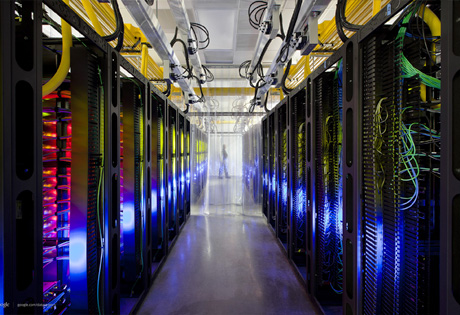
By the end of 2024, there will be 5,697 public data centers worldwide, including 5,186 colocation sites and 511 hyperscale sites.
Global Data Center Status and Trends

By the end of 2024, there will be 5,186 colocation data centers worldwide. With a compound annual growth rate (CAGR) of 6.6%, the number of colocation data centers will increase to 7,640 by 2030.
Where are The World's Data Centers?