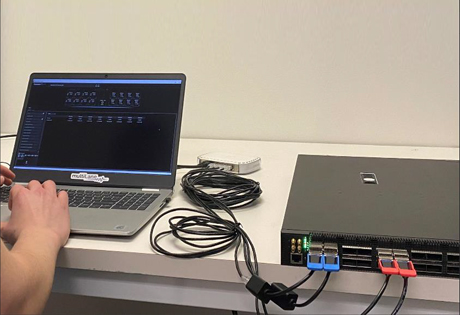
100G ZR Pluggable Optical Module
2024-08-16
The telecommunications industry continues to evolve, with new technologies emerging to meet the growing demands for data transmission. One such innovation is the development of 100ZR coherent access pluggable optics. This article will explore what 100ZR is, its importance in access networks, and the key requirements for successful implementation.
What is 100ZR
100ZR refers to a new generation of coherent optics designed for 100 Gigabits per second (100G) transmission in access and edge networks. These modules are of particular interest because they represent a “step down” from coherent technology, which has traditionally been used for higher speed, long-distance communications.
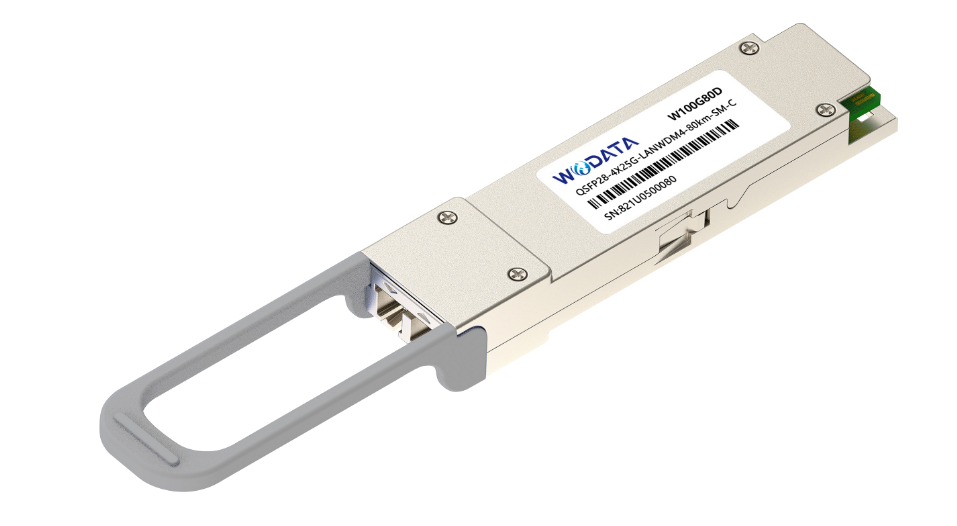
The Growing Importance of 100ZR
Recent industry surveys show strong interest in 100ZR technology. According to a Heavy Reading survey, more than 75% of operators believe that 100G coherent pluggable optics will play a key role in their edge and access network evolution strategies. This interest has led to multiple vendors announcing 100ZR development projects, including Acacia, Coherent/ADVA, Marvell/InnoLight, and Marvell/OE Solutions.
Market analysts have also recognized the potential of 100ZR. For example, Cignal AI doubled its 100ZR shipment forecast due to the viability of new low-power solutions in the QSFP28 form factor that enable new use cases in access networks.
Key Requirements for 100ZR Coherent Access Pluggable Optics
1. Lower Power Consumption:
Access network equipment often operates in uncontrolled environments with limited cooling capabilities. Therefore, power consumption is a key factor. With power consumption up to 6 watts, QSFP28 form factor solutions are becoming increasingly attractive for 100ZR applications. Compared to the QSFP-DD form factor (up to 15 watts), their lower power consumption allows for denser stacking in the access network room.
Access network equipment often operates in uncontrolled environments with limited cooling capabilities. Therefore, power consumption is a key factor. With power consumption up to 6 watts, QSFP28 form factor solutions are becoming increasingly attractive for 100ZR applications. Compared to the QSFP-DD form factor (up to 15 watts), their lower power consumption allows for denser stacking in the access network room.
2. Compatibility with existing infrastructure:
QSFP28 modules are compatible with existing access network equipment, which typically have QSFP28 slots. This compatibility is important for easy integration and cost-effective deployment.
QSFP28 modules are compatible with existing access network equipment, which typically have QSFP28 slots. This compatibility is important for easy integration and cost-effective deployment.
3. New laser and DSP solutions:
The development of 100ZR plug-ins requires new laser and digital signal processor (DSP) solutions that are optimized for lower power consumption and a smaller footprint. Companies such as EFFECT Photonics are developing pico-tunable laser assemblies (pTLAs) and 100G DSPs designed specifically for 100ZR solutions in the QSFP28 form factor.
The development of 100ZR plug-ins requires new laser and digital signal processor (DSP) solutions that are optimized for lower power consumption and a smaller footprint. Companies such as EFFECT Photonics are developing pico-tunable laser assemblies (pTLAs) and 100G DSPs designed specifically for 100ZR solutions in the QSFP28 form factor.
4. A Vibrant Ecosystem:
To scale production and make 100ZR solutions more widely available, the industry needs multiple suppliers of lasers, DSPs, and complete transceiver solutions. A diverse supplier ecosystem similar to the 400ZR market will help meet growing demand and reduce costs.
To scale production and make 100ZR solutions more widely available, the industry needs multiple suppliers of lasers, DSPs, and complete transceiver solutions. A diverse supplier ecosystem similar to the 400ZR market will help meet growing demand and reduce costs.
5. Standardization and Interoperability:
The success of 400ZR solutions is largely due to standardization efforts led by the Optical Networking Forum (OIF). Similar standardization and interoperability efforts are important for 100ZR to reach its full market potential. This includes standards for power consumption, line interfaces, and management and control interfaces to enable remote configuration and diagnostics.
The success of 400ZR solutions is largely due to standardization efforts led by the Optical Networking Forum (OIF). Similar standardization and interoperability efforts are important for 100ZR to reach its full market potential. This includes standards for power consumption, line interfaces, and management and control interfaces to enable remote configuration and diagnostics.
Challenges and Opportunities
While the need for 100ZR solutions in access networks is clear, there are challenges to address:
Supply and Demand Balance: Currently, there is an insufficient supply of viable 100ZR solutions that meet access network price and power targets. Increasing the number of suppliers and supporting standardization efforts can help expand supply and expand the market.
Price Sensitivity: Access networks are very price sensitive. Wider adoption of 100ZR plug-in cables depends on driving down prices through increased competition and economies of scale.
Technical barriers: Developing lasers and DSPs that can meet the power and size requirements of the QSFP28 form factor while delivering 100G performance is technically challenging.
Interoperability: Ensuring that 100ZR plug-ins from different vendors can work together seamlessly is important for widespread adoption.
Three Major Trends in Data Center Development
The Data Center Fiber Optic Equipment
Related Article

By the end of 2024, there will be 5,697 public data centers worldwide, including 5,186 colocation sites and 511 hyperscale sites.
Global Data Center Status and Trends

By the end of 2024, there will be 5,186 colocation data centers worldwide. With a compound annual growth rate (CAGR) of 6.6%, the number of colocation data centers will increase to 7,640 by 2030.
Where are The World's Data Centers?